
The B7 chord is an essential chord in guitar playing, particularly if you are exploring blues, jazz, or rock genres. Its distinct sound provides a rich, complex texture that can add depth to your music. Despite its importance, many guitarists find the B7 chord challenging due to its finger positioning and the fact that it requires several strings to be fretted in a compact space.
This article aims to provide practical guidance for mastering the B7 chord, helping you to integrate it smoothly into your playing repertoire. We will explore effective techniques, finger positioning advice, and common challenges associated with this chord.
Understanding the B7 Chord Structure
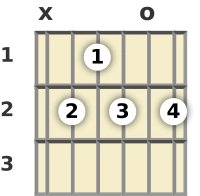
The B7 chord is a four-note chord consisting of the notes B, D#, F#, and A. On the guitar, this chord is played across multiple strings, which can make it a bit of a stretch if you’re not used to it. Here’s a standard shape for the B7 chord:
- Place your first finger on the 1st fret of the D string.
- Put your second finger on the 2nd fret of the A string.
- Place your third finger on the 2nd fret of the G string.
- Finally, position your fourth finger on the 2nd fret of the high E string.
This positioning might seem intricate at first glance, but with consistent practice, it becomes more manageable.
Techniques for Smooth Transitions
One of the common issues guitarists face is smoothly transitioning into the B7 chord from other chords, such as E or A. A useful technique is to practice these transitions slowly, focusing on moving your fingers simultaneously rather than one by one. Start by practicing at a reduced speed and gradually increase your pace as you become more confident.
The video above demonstrates various transition techniques, providing visual guidance that complements your practice.
Overcoming Common Challenges
It’s not uncommon to feel frustrated when first tackling the B7 chord due to buzzing strings or muted notes. These issues usually stem from insufficient finger pressure or incorrect positioning. Here are some solutions:
| Challenge | Solution |
|---|---|
| Buzzy Notes | Ensure your fingers are pressing down firmly and are positioned as close to the frets as possible, without touching them. |
| Muted Strings | Check that your fingers are arching enough so that they don’t inadvertently touch adjacent strings. |
Integrating B7 into Your Music
Once you have mastered the B7 chord, the next step is to incorporate it into your playing. The B7 is particularly popular in blues progressions, often preceding the E major or E7 chord. Experiment with it in different genres to understand its versatility.
For more advanced players, try exploring variations and inversions of the B7 to add further complexity and richness to your compositions. With time and patience, the B7 chord will become a valuable resource in your musical toolkit, opening up new creative pathways and enhancing your overall guitar proficiency.
Interested in further expanding your chord knowledge and expertise? Visit B7 for additional resources and tips.